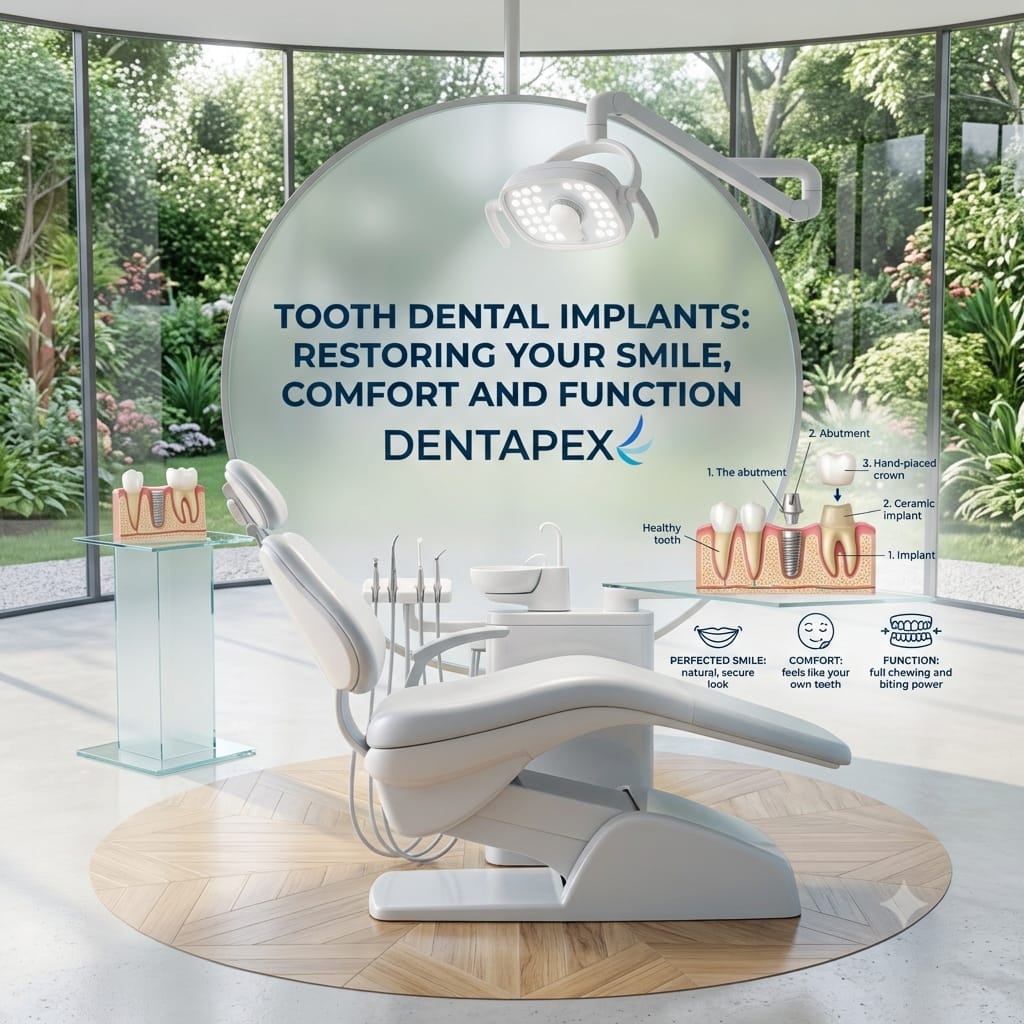
Losing a natural tooth can affect more than the appearance of your smile. A missing tooth may make eating difficult, affect speech, and leave you feeling less confident when smiling or talking. Fortunately, modern dentistry offers reliable tooth replacement options. A tooth dental implant can provide a stable foundation for replacing a missing tooth and restoring both appearance and everyday function.
At Dentapex, we provide comprehensive dental care for patients across Sydney, with clinics in Padstow, Stanhope Gardens, and Dee Why. Our dental team can assess your oral health and discuss suitable tooth replacement options based on your individual needs.
What Is a Tooth Dental Implant?
A tooth dental implant is a replacement for the root portion of a missing tooth. It is placed into the jawbone and can support a dental crown, bridge, or other restoration.
Unlike a removable denture, an implant is designed to provide a fixed foundation. Once the restoration is completed, it can look and feel similar to a natural tooth.
Components of a Dental Implant
A typical implant restoration consists of several components:
- Implant: The post that is placed into the jawbone.
- Abutment: The connector between the implant and restoration.
- Dental crown: The visible part designed to replace the missing tooth.
Creating a Natural-Looking Smile
The final crown can be designed to complement the colour, shape, and proportions of your surrounding teeth. This allows the replacement tooth to blend naturally with your smile.
How Do Dental Implants Restore Chewing Function?
A missing tooth can affect the way you bite and chew food. Depending on the location of the missing tooth, you may find yourself avoiding certain foods or relying more heavily on other teeth.
A properly planned tooth dental implant can provide a stable replacement that helps restore everyday chewing function.
Improved Stability
Because the implant is anchored into the jawbone, the replacement tooth is designed to remain securely in place during normal eating and speaking.
Supporting Everyday Comfort
A stable tooth replacement can make everyday activities such as eating and talking feel more natural compared with some removable alternatives.
Replacing a Missing Tooth
Replacing a missing tooth can also help prevent neighbouring teeth from shifting into the empty space. Your dentist can evaluate your bite and discuss whether an implant is an appropriate solution.
What Happens During Dental Implant Surgery?
Dental implant surgery involves placing the implant into the jawbone. The exact process can vary depending on your oral health, the location of the missing tooth, and the treatment plan developed by your dentist.
Initial Consultation
The process begins with a comprehensive dental assessment. Your dentist examines your teeth, gums, and jawbone and discusses your medical and dental history.
Imaging may also be used to evaluate the available bone and determine the most suitable position for the implant.
Implant Placement
During dental implant surgery, the implant is carefully positioned within the jawbone. The area is treated using appropriate anaesthesia to help maintain patient comfort.
Healing and Integration
Following placement, the implant requires a period of healing. During this stage, the implant can integrate with the surrounding bone, creating a stable foundation for the final restoration.
Attaching the Restoration
Once healing is complete and the implant has been assessed, an abutment and dental crown may be attached. Your dentist will check the fit, appearance, and bite before completing the treatment.
Benefits of Tooth Dental Implants
Dental implants can offer several benefits for suitable patients.
Restoring Your Smile
A missing tooth can create a visible gap. An implant-supported restoration can help fill that space and create a more complete smile.
Improving Chewing Ability
A stable replacement tooth can help you return to a more comfortable and natural eating experience.
Supporting Dental Function
Replacing missing teeth can help maintain a balanced bite and reduce the need to rely excessively on neighbouring teeth.
Long-Term Tooth Replacement
With proper oral hygiene and regular dental care, dental implants can provide a long-lasting tooth replacement solution.
Are Dental Implants Suitable for Everyone?
Dental implants are not automatically suitable for every patient. Your dentist will evaluate your oral health, jawbone, gums, bite, and general dental circumstances before recommending treatment.
Factors Your Dentist May Consider
These can include:
- Available jawbone
- Gum health
- Number and location of missing teeth
- Overall oral hygiene
- Existing dental conditions
- Your treatment expectations
Additional Treatment May Be Required
Some patients may need treatment for gum disease or other dental problems before implant placement. In certain circumstances, additional procedures may also be considered to prepare the area for an implant.
A Personalised Treatment Plan
Your dentist will explain the recommended approach, expected stages, potential risks, recovery considerations, and alternatives before you decide to proceed.
Caring for Your Dental Implant
Good oral hygiene is important for protecting both your implant and surrounding natural teeth.
Daily Oral Hygiene
Brush twice a day with fluoride toothpaste and clean carefully around the implant and restoration. Your dentist may recommend specific brushes, floss, or other cleaning aids.
Regular Dental Visits
Routine examinations allow your dental team to monitor the implant, gums, and surrounding teeth. Professional cleaning can also help maintain good oral health.
Protecting Your Investment
Avoid using your teeth to bite hard objects and follow all post-treatment instructions provided by your dental team. Contact your dentist if you notice persistent discomfort, swelling, movement, or other changes around the implant.
Why Choose Dentapex?
Dentapex provides general, cosmetic, restorative, and emergency dental care for patients across Sydney. With clinics in Padstow, Stanhope Gardens, and Dee Why, our team provides personalised dental solutions based on individual needs.
If you have lost a tooth and are considering a tooth dental implant, Dentapex can assess your smile and discuss whether implant treatment may be suitable. Our team can also explain the stages involved in dental implant surgery, recovery, aftercare, and alternative tooth replacement options.
Replacing a missing tooth can restore more than your smile. It can help improve comfort, confidence, and everyday chewing function. A professional dental assessment is the best way to understand your options and create a treatment plan suited to your needs.
Frequently Asked Questions
How long does dental implant treatment take?
Treatment time varies depending on factors such as healing, bone availability, and whether additional dental procedures are required. Your dentist can provide a personalised timeline after assessment.
Is dental implant surgery painful?
Dental implant surgery is performed using appropriate anaesthesia to help maintain comfort during the procedure. Some soreness or swelling may occur during the recovery period.
How long can a tooth dental implant last?
Dental implants are designed as a long-term tooth replacement option. Their longevity depends on factors including oral hygiene, general dental health, lifestyle, and regular professional care.
Can dental implants replace multiple missing teeth?
Yes. Depending on your circumstances, implants may be used to support individual crowns, bridges, or other implant-supported restorations.
How do I know if I am suitable for dental implants?
A dental examination and appropriate imaging can help determine whether an implant is suitable. Your dentist will evaluate your jawbone, gums, oral health, and individual treatment needs before making a recommendation.